

Microsoft Research Cambridge
新闻与深度文章

| Christopher Bishop
Harness Machine Learning to Improve People’s Lives At Microsoft, we are committed to leveraging the power of Artificial Intelligence (AI) to benefit people and greater society. Advances in AI can be applied to address some of the world’s biggest challenges,…

Episode 7, January 10, 2018 – When we look at a skyscraper or a suspension bridge, a simple search engine box on a screen looks tiny by comparison. But Dr. Simon Peyton Jones would like to remind us that computer…
新闻报道 | Microsoft Research Podcast
Functional Programming Languages and the Pursuit of Laziness with Dr. Simon Peyton Jones
Dr. Peyton Jones shares his passion for functional programming research, reveals how a desire to help other researchers write and present better turned him into an unlikely YouTube star, and explains why, at least in the world of programming languages,…
| Sebastian Nowozin
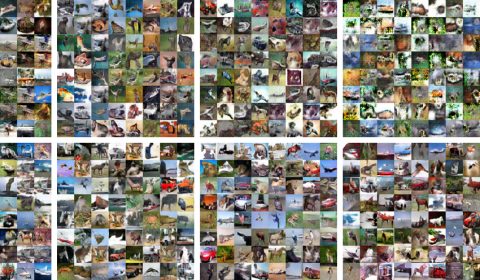
Recent methods in artificial intelligence enable AI software to produce rich and creative digital artifacts such as text and images painted from scratch. One technique used in creating these artifacts are generative adversarial networks (GANs). Today at NIPS 2017, researchers…
新闻报道 | The AI Blog
Microsoft looks to healthcare partners for ways to bring AI benefits to cancer patients
A team of artificial intelligence experts at Microsoft’s Cambridge, U.K., research lab has spent more than a decade looking at ways that AI could be used to make cancer treatment more targeted and effective.
新闻报道 | Windows Central
Microsoft’s Project Emma helps people with Parkinson’s Disease
Approximately 10 million people around the world are living with Parkinson’s Disease, and Microsoft’s Emma Watch can help alleviate one of the disease’s most troubling symptoms.
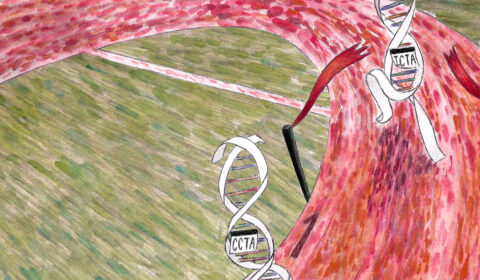
By Microsoft Research Lab – Cambridge and Department of Bioengineering, Rice University The binding of DNA strands by Watson-Crick base pairing is a fundamental process in biotechnology, which is used around the world for reading and writing DNA sequences and…

By Microsoft Research Human-engineered systems, from ancient irrigation networks to modern semiconductor circuitry, rely on spatial organization to guide the flow of materials and information. Living cells also use spatial organization to control and accelerate the transmission of molecular signals,…
新闻报道 | Nature Nanotechnology
A spatially localized architecture for fast and modular DNA computing
Fast and scalable molecular logic circuits can be created through the spatial organization of DNA hairpins on DNA origami scaffolds.