Computer Vision
Enabling computers and devices to understand what they see.

Video
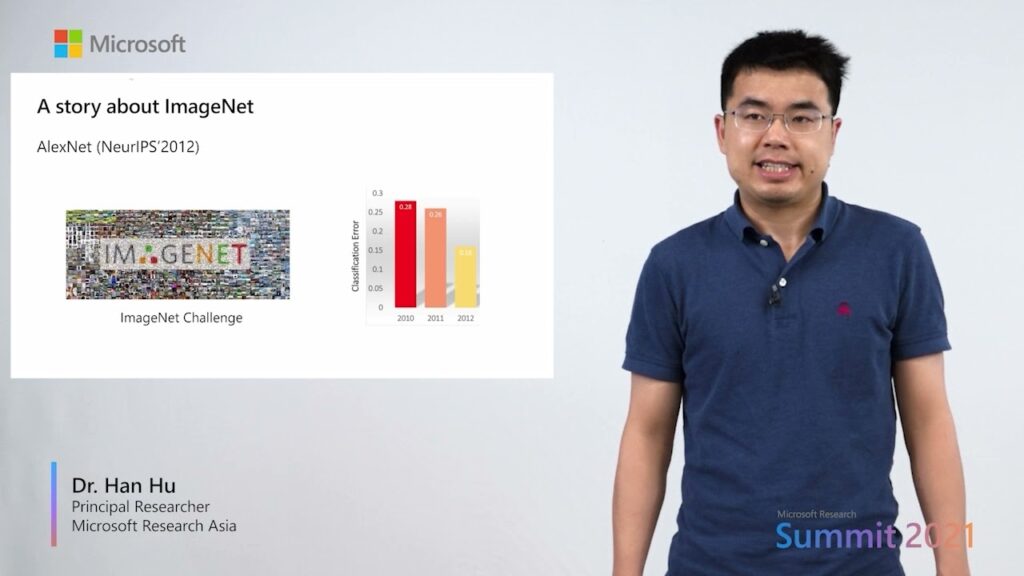
Research talks: Few-shot and zero-shot visual learning and reasoning
Humans learn, infer, and reason by leveraging prior knowledge without necessarily observing a large number of examples. Visual learning and reasoning technologies, such as few-shot and zero-shot learning, aim to enable human-like learning and reasoning…
Group
Biomedical Imaging
We are exploring how novel signal processing techniques and AI can allow us to produce images from less data than is currently required.
Microsoft Research Blog
ACAV100M: Scaling up self-supervised audio-visual learning with automatically curated internet videos
The natural association between visual observations and their corresponding sounds has exhibited powerful self-supervision signals for learning video representations, which makes the ever-growing amount of online video an attractive data source for self-supervised learning. However,…

Project
SmartKC: A Smartphone-based Corneal Topographer
Keratoconus is a severe eye disease affecting the cornea (the clear, dome-shaped outer surface of the eye), causing it to become thin and develop a conical bulge. If not treated in time, keratoconus can lead…
Microsoft Research Blog
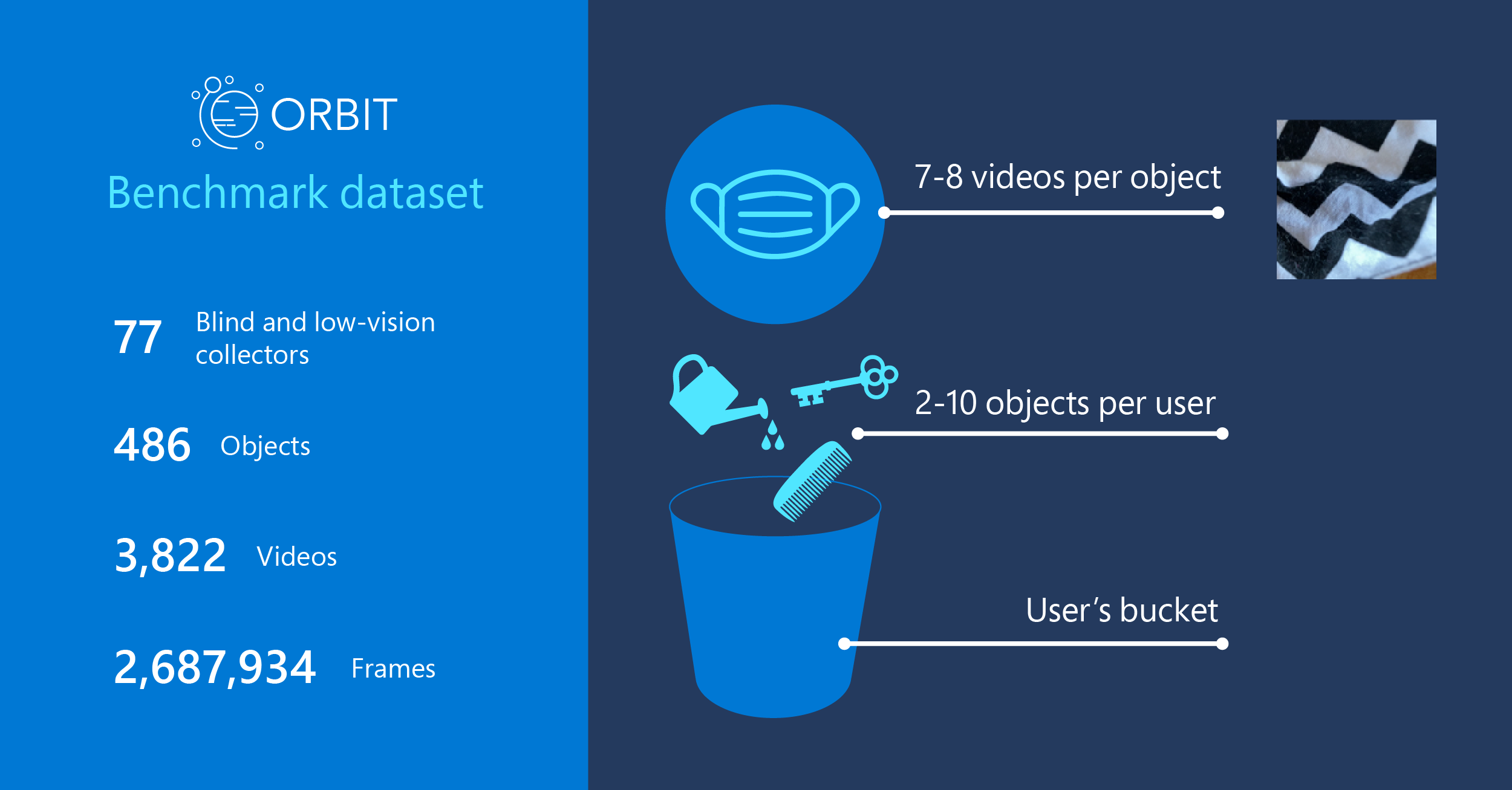
Announcing the ORBIT dataset: Advancing real-world few-shot learning using teachable object recognition
Object recognition systems have made spectacular advances in recent years, but they rely on training datasets with thousands of high-quality, labelled examples per object category. Learning new objects from only a few examples could open…
Event
Microsoft Research Summit 2021
The inaugural Microsoft Research Summit brought together science and technology leaders from around the world, contributing over 190 presentations about research projects driving advances across the sciences and pushing the limits of technology toward achieving…