Rama Chellappa – Compressive Sensing: Is It the Next Best Hope for Computer Vision?
- Ashwani Sharma, Microsoft
Since the early 1970s, computer vision researchers have relied on concepts from physics, mathematics, and statistics to develop new approaches for many computer vision problems. These include image formation models, regularization approaches, optimization techniques, Markov random fields, Bayesian inference, machine learning, manifold learning, and more recently, compressive sensing.
In this talk, I will explore the notion that the latest excitement about compressive sensing and sparse representations is justified in the context of generating novel algorithms for computer vision problems. Examples from 3-D modeling from sparse gradients, dictionary-based face recognition, image reconstruction from gradients, and estimation of BRDFs will be provided to support the discussions.
-
-

Ashwani Sharma
-
-
Watch Next
-
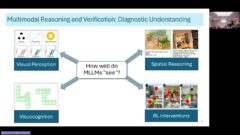
Multimodal & Embodied Intelligence (S2)
- Rajiv Ratn Shah,
- Tanuja Ganu,
- Mercy Ranjit
-
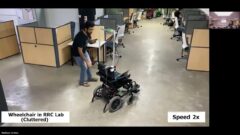
Multimodal & Embodied Intelligence (S1), Panel on Multimodal AI: Progress, Pitfalls, Possibilities
- Madhava Krishna,
- Sriram Ganapathy,
- Somak Aditya
-
-
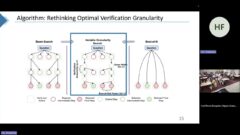
Session on Reasoning
- Hongxiang Fan,
- Nagarajan Natarajan
-
Session on Retrieval
- Lokesh Nagalapatti,
- Soumen Chakrabarti
-
-
GeoMind: A Multi-Agent Framework for Geospatial Decision Support
- Muhammad Sohail Danish
-
-
From Microfarms to the Moon: A Teen Innovator’s Journey in Robotics
- Pranav Kumar Redlapalli
-
Microsoft Research India - The lab culture
- P. Anandan,
- Indrani Medhi Thies,
- B. Ashok