Learning Genetic Perturbation Effects at Single-Cell Resolution for Virtual Cells
- Jiaqi Zhang, Columbia University
- Microsoft Research New England Generative Modeling & Sampling Seminar
Complex causal mechanisms among genes govern cellular functions in health and disease. Understanding these mechanisms can accelerate therapeutic discovery but remains challenging due to the large number of genes and their intricate dependencies. Recent advances in experimental technologies are making this problem increasingly tractable: it is now possible to systematically perturb individual genes or gene combinations in single cells and measure their downstream effects, enabling the empirical identification and validation of causal relationships. However, perturbational data are high-dimensional, making them challenging to interpret and costly to collect.
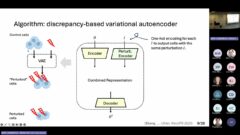
In this talk, I will present our work tackling these challenges. First, we introduced causal representation theories and algorithms with identifiability guarantees to uncover latent variables underlying high-dimensional data. Second, we translated these insights into practice and developed a method for modeling perturbations that can predict the effects of novel perturbations at single-cell resolution, incorporating both distributional shifts and prior domain knowledge. Finally, we showed how predictive perturbational modeling can improve future experimental design, illustrated by an application in which we predicted and validated previously unknown T-cell regulators with therapeutic potential for cancer immunotherapy.
Speaker bio
Jiaqi Zhang is an incoming Assistant Professor at Columbia University in the Departments of Computer Science and Systems Biology. She earned her PhD in Electrical Engineering and Computer Science from MIT, advised by Caroline Uhler, and her BSc in Mathematics and Statistics from Peking University. Her research focuses on establishing theoretical and algorithmic foundations for learning and decision-making in causal systems, grounded in applications to cell biology. Her work is supported by the Eric and Wendy Schmidt Center Fellowship at the Broad Institute and the Apple AI/ML PhD Fellowship. She is a recipient of the Stuart L. Schreiber Award in Scientific Excellence and was selected as a Rising Star in EECS. More information can be found at https://jqvicky.github.io/ (opens in new tab).

Series: MSR New England Generative Modeling & Sampling Seminar
-
-
-
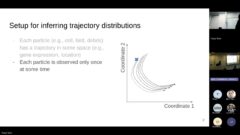
Inferring Unobserved Trajectories from Multiple Temporal Snapshots
- Yunyi Shen & Carles Domingo-Enrich
-
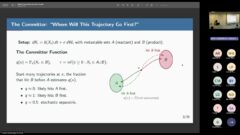
Rare event analysis via stochastic optimal control
- Yuanqi Du & Carles Domingo-Enrich
-
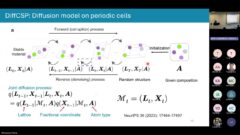
Constrained Generative AI for Materials Inverse Design
- Mouyang Cheng
-
-
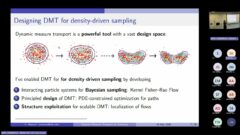
Designing Dynamic Measure Transport for Sampling
- Aimee Maurais
-
-

Physics and information theory of generative diffusion
- Luca Ambrogioni
-
-
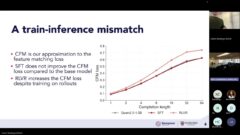
Matching features, not tokens: Energy-based fine-tuning of language models
- Mujin Kwun,
- Carles Domingo-Enrich
-
-
-
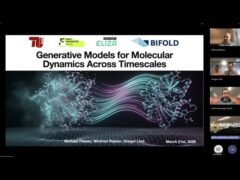
Generative Models for Molecular Dynamics Across Timescales
- Michael Plainer,
- Winfried Ripken,
- Gregor Lied
-
-
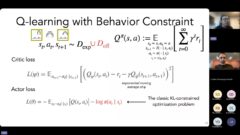
Q-learning with Flow-Matching Policies
- Qiyang (Colin) Li
-
-
-
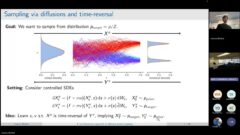
A non-Markovian approach to diffusion-based sampling
- Lorenz Richter
-
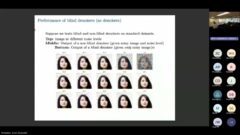
Blind denoising diffusion models and the blessings of dimensionality
- Aram-Alexandre Pooladian
-

Meta Flow Maps
- Peter Potaptchik